Searching for “home security camera installation near me” usually means one of two things: you’ve bought a camera system and realized the install is more complicated than YouTube made it look, or you’re smart enough to skip the headache entirely. Either way, you’re making the right call. Professional installation isn’t just about drilling holes in the right spots, it’s about proper wire routing, weatherproofing, network configuration, and making sure your cameras actually cover the zones that matter. This guide walks through finding qualified installers, what to expect during the process, and whether professional help is worth the investment for your specific setup.
Table of Contents
ToggleKey Takeaways
- Professional home security camera installation ensures proper placement, network configuration, and weatherproofing that DIY setups often miss, protecting your manufacturer’s warranty.
- Qualified installers should have low-voltage electrical licenses, liability insurance, and manufacturer certifications—verify credentials with your state contractor licensing board before hiring.
- A standard four-camera residential installation takes 4-8 hours and costs $1,200-$2,000 for complete systems, with labor-only rates ranging from $400-$800 depending on complexity.
- Get detailed quotes from at least three installers that itemize equipment, labor, cable runs, and permits rather than accepting phone estimates without a property site survey.
- Choose professional installation for wired PoE systems with 4+ cameras, multi-story homes, or complex properties; DIY works best for wireless battery-powered cameras on single-story homes.
- Ask installers about their cable routing methods, weatherproofing techniques, network security measures (like VLANs), warranty coverage, and post-installation support before signing contracts.
Why Professional Installation Matters for Your Home Security System
A security camera is only useful if it works when you need it. Professional installers bring three critical advantages: experience with placement, technical expertise, and warranty protection.
Camera placement is where most DIY installations fall short. Installers know that a camera mounted at 8-10 feet above ground discourages tampering while maintaining facial recognition capability. They understand sight lines, lighting conditions, and how to avoid IR reflection off siding or eaves. A camera pointed at your driveway does nothing if headlight glare washes out the image at night.
Technical setup involves more than plugging in a power adapter. PoE (Power over Ethernet) systems require network configuration, VLAN setup for security, and proper cable termination. Wireless cameras need mesh network optimization and interference testing. Professional installers carry cable certifiers, Wi-Fi analyzers, and know how to crimp RJ45 connectors that won’t fail in six months.
Most manufacturers void warranties on improperly installed equipment. Water intrusion from incorrectly sealed penetrations, voltage spikes from improper grounding, or physical damage from bad mounting, all avoidable with professional installation. Many pros also include service warranties covering their work for 1-2 years, something you won’t get from a weekend DIY project.
Structural considerations matter too. Mounting a camera on vinyl siding requires backing plates and sealant. Brick or stucco needs masonry bits and anchors. Installers working with modern security devices understand load-bearing requirements and won’t compromise your home’s envelope.
How to Find Qualified Security Camera Installers in Your Area
Start with installer credentials, not just Google star ratings. Look for low-voltage electrical licenses (required in most jurisdictions for running camera cabling), liability insurance, and manufacturer certifications. Brands like Hikvision, Dahua, and Axis run installer certification programs that confirm technical competency.
Check multiple platforms: Local installers listed through customer-reviewed contractor networks offer verified work histories and pricing transparency. Also check state contractor licensing boards for complaint histories and verify their insurance is current.
Ask for references from recent jobs, specifically installations similar to yours. A four-camera residential install differs from a 16-camera commercial system. Request photos of completed work showing cable routing, junction box placement, and finished installations. Sloppy cable management and exposed wiring are red flags.
Local security companies versus general electricians: Security-focused companies know surveillance systems but may push proprietary equipment. Licensed electricians handle the power and wiring but might lack experience with network video recorders (NVRs) and IP camera configuration. The best installers combine both skill sets.
Get quotes from at least three installers. Detailed quotes should itemize equipment, labor, materials (cable, connectors, mounts), permits, and any ongoing monitoring or maintenance contracts. Avoid installers who quote over the phone without a site visit, proper estimates require measuring cable runs, assessing Wi-Fi coverage, and identifying mounting challenges.
What to Expect During a Professional Installation Appointment
A professional installation typically takes 4-8 hours for a standard four-camera residential system, longer for larger setups or complex wiring.
Site survey comes first: The installer walks your property identifying camera locations, discussing coverage priorities, and marking drill points. This is when you clarify what you want monitored, driveways, entry points, backyard play areas. Be specific about blind spots or problem areas.
Installation sequence:
-
Cable routing: For wired systems, installers run Cat5e or Cat6 cable through attics, crawlspaces, or along exterior walls. Proper installs use weatherproof-rated cable outdoors and avoid running low-voltage alongside high-voltage electrical (minimum 6-inch separation per NEC guidelines).
-
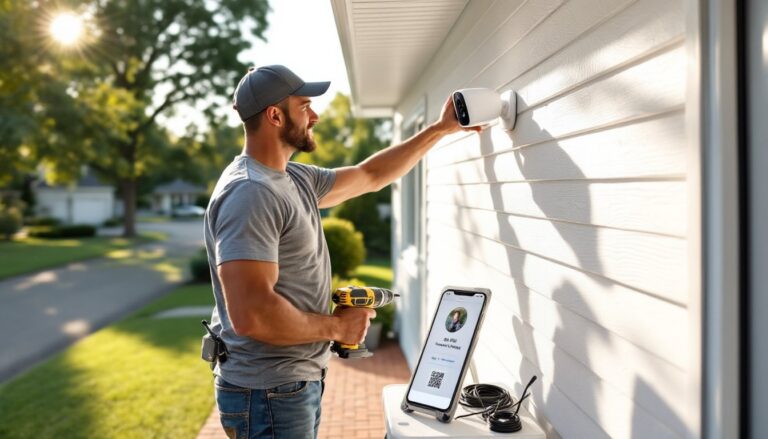
Mounting: Cameras get mounted with stainless steel or zinc-coated hardware to prevent rust. Penetrations through siding or brick get sealed with silicone or polyurethane caulk. Mounts should be level and secured to solid backing, not just siding.
-
Connection and testing: Each camera connects to the NVR or network switch, then gets configured for IP addressing, motion zones, recording schedules, and mobile app access. Installers test night vision, motion detection sensitivity, and verify mobile notifications work properly.
-
System walkthrough: Before they leave, the installer should demonstrate the system, live viewing, playback, mobile app setup, and basic troubleshooting. Most homeowners exploring complete security systems benefit from understanding recording retention settings and storage management.
Cleanup matters. Professional installers patch drywall holes, vacuum up drill dust, and haul away packaging. You shouldn’t need a Shop-Vac after they leave.
Average Costs for Security Camera Installation Services
Installation costs vary by system complexity, property size, and regional labor rates. Here’s what to expect in 2026:
Labor-only installation (you supply equipment):
- Single camera: $100-$200
- 4-camera system: $400-$800
- 8-camera system: $800-$1,500
Complete system installation (equipment + labor):
- Basic 4-camera PoE system: $1,200-$2,000
- Mid-range 4-camera wireless with NVR: $1,800-$3,000
- Premium 8-camera system with 4K resolution: $3,500-$6,000
Factors that increase cost include difficult cable runs (finished ceilings, multiple stories, concrete drilling), outdoor trenching for underground cable, network equipment upgrades (switches, routers), and permit fees (typically $50-$150 where required).
Many installers charge extra for configuration services: cloud storage setup, smart home integration (Alexa, Google Home), or connection to professional monitoring services. Budget an additional $100-$300 for these add-ons.
Ongoing costs matter too. Cloud storage subscriptions run $5-$30/month depending on camera count and retention period. Local storage via NVR eliminates monthly fees but requires upfront investment in hard drives, figure $100-$200 per 2TB drive.
Regional variations are significant. Major metro areas (NYC, San Francisco, Boston) run 20-40% higher than national averages. Rural areas might see lower labor costs but limited installer availability. Use platforms like HomeAdvisor for localized cost estimates based on your zip code.
DIY vs. Professional Installation: Which Option Is Right for You?
The honest answer depends on your system type, technical skills, and property layout.
Go DIY if:
- You’re installing wireless battery-powered cameras (Arlo, Blink, Ring) that mount with screws and connect via Wi-Fi. These are genuinely plug-and-play.
- Your property has easy camera locations, single-story with accessible eaves and nearby power outlets.
- You’re comfortable with basic networking (connecting devices to Wi-Fi, port forwarding if needed).
- You have the tools: drill/driver, masonry bits for brick/concrete, ladder rated for your working height, cable fish tape for routing wires.
Choose professional installation if:
- You’re running a PoE system with 4+ cameras requiring cable runs through walls, attics, or crawlspaces.
- Your property has two stories, stucco/brick exterior, or requires outdoor cable burial.
- You want the system integrated with existing home automation or alarm systems.
- You need guaranteed warranty coverage, many manufacturers require professional installation.
- You’re uncomfortable working on ladders or drilling into your home’s exterior.
Middle ground exists: Some companies offer hybrid service where they mount and configure cameras you’ve positioned, saving money on the full site survey while ensuring proper technical setup.
Time investment matters. DIY installation of a four-camera system typically takes a full weekend for someone with moderate skills, more if you hit complications. Professionals finish in a day and handle permit filing if required.
For homeowners considering broader camera system options, matching installation method to system complexity prevents buyer’s remorse. That $800 “pro installation fee” looks reasonable when you’re three hours into fishing cable through insulation.
Questions to Ask Before Hiring a Local Installer
Vet installers thoroughly before signing contracts. Here are the questions that separate professionals from parts changers:
Licensing and insurance:
- “What’s your low-voltage contractor license number?” (Verify with your state board)
- “Can you provide proof of liability and workers’ compensation insurance?”
- “Are you certified by any camera manufacturers?”
Experience and expertise:
- “How many residential camera systems do you install monthly?”
- “What brands do you typically work with, and why?” (Good installers explain equipment choices)
- “Can I see examples of similar installations you’ve completed?”
Installation specifics:
- “Will you handle permit applications if required?”
- “How do you route cables, through walls, conduit, or surface mount?”
- “What weatherproofing methods do you use for exterior penetrations?”
- “Do you provide a cable routing diagram for future reference?”
System configuration:
- “Will you configure mobile app access and remote viewing?”
- “How do you secure the network against unauthorized access?” (Look for answers mentioning VLANs, password policies, firmware updates)
- “What recording retention can I expect with the included storage?”
Warranties and service:
- “What’s covered under your installation warranty?”
- “Do you offer service contracts for maintenance and updates?”
- “What’s your typical response time for service calls?”
Post-installation support:
- “Will you provide training on system operation?”
- “Is phone or email support included?”
- “Who handles firmware updates, me or you?”
Installer reviews on platforms highlighting smart home technology often reveal patterns about communication, punctuality, and problem-solving abilities. Pay attention to how installers handle callbacks and warranty issues, that’s when true professionalism shows.
Conclusion
Finding the right security camera installer comes down to verifying credentials, getting detailed quotes, and matching your system complexity to installation method. Professional setup delivers proper camera placement, reliable technical configuration, and warranty protection that DIY can’t match, especially for wired systems or complex properties. Whether you hire a pro or tackle it yourself, the goal is the same: cameras that actually work when you need them.